
Introduction
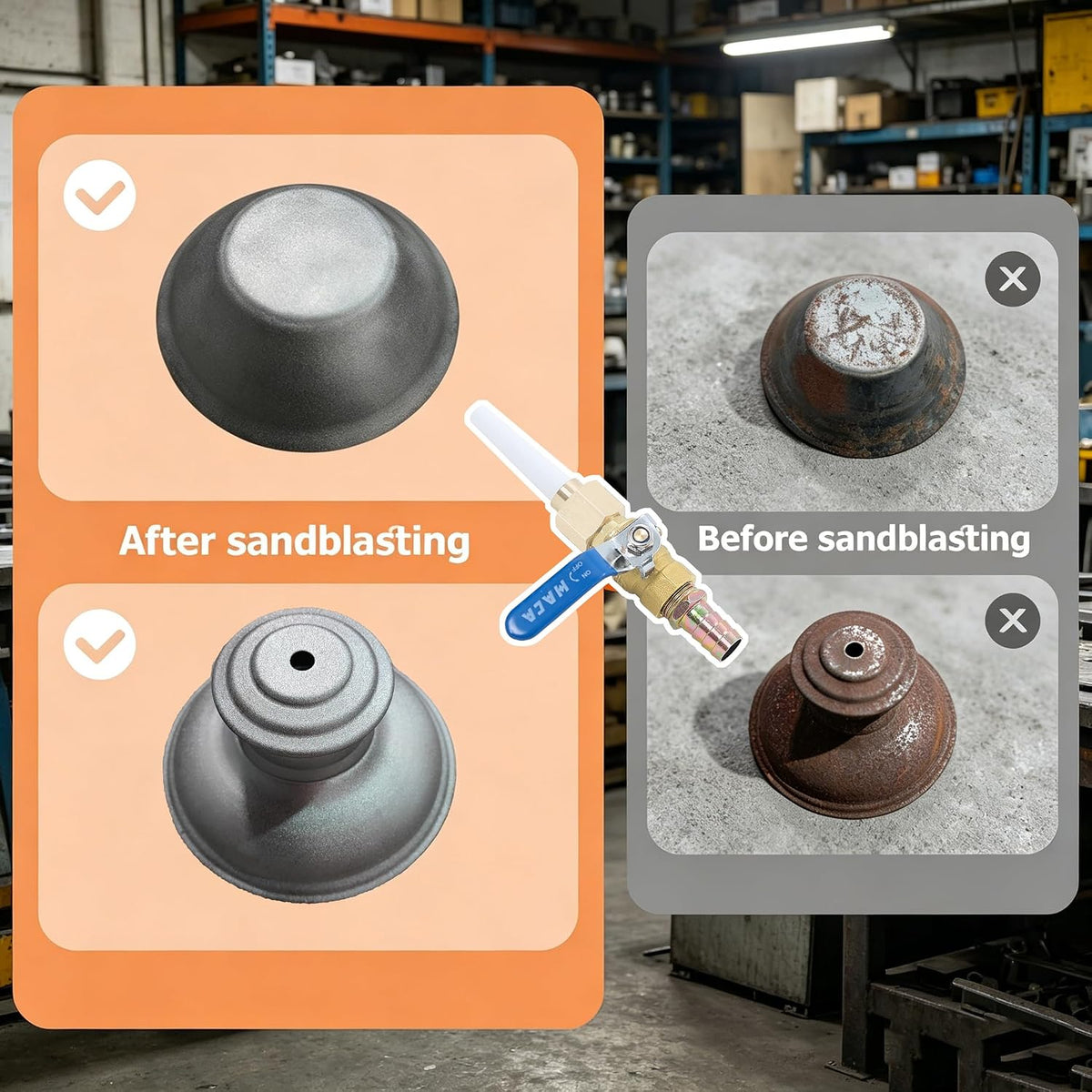
If you are a DIY hobbyist or workshop operator, slow sandblasting and excessive abrasive waste eat into your time and budget. Many people struggle with weak blasting power, uneven surfaces and repeated rework, thinking they must buy a brand-new sandblaster. The truth is you can greatly improve sandblasting efficiency with easy adjustments to your air setup, nozzle condition, abrasive media and blasting technique. These tweaks cut material costs and help you finish every blasting project faster.
Main Problem
- Sandblasting progress is slow; rust and old paint take forever to strip
- Abrasive media burns through quickly, raising your ongoing operating cost
- Patchy, uneven surface finish, requiring you to re-blast the same workpiece
- Air pressure drops mid-blast, which kills your sandblaster cleaning power
- Worn nozzles quietly reduce performance without obvious warning
Technical Explanation
Sandblasting uses compressed air to accelerate abrasive grains. Your cleaning power depends on particle kinetic energy.
Five key factors control sandblasting efficiency: air CFM, nozzle inner bore size, abrasive grit type, blast distance and blasting angle.
Insufficient compressor CFM causes pressure drop and slows abrasive particles. A worn nozzle widens the bore, wasting compressed air and blasting media. Blasting straight at 90° creates media rebound and lowers stripping speed. The optimal blasting angle for rust and paint removal sits at 30–45 degrees.
Comparison/Table
Factor Low-Efficiency Mistake Pro High-Efficiency Fix
Nozzle Worn nozzle with enlarged bore Install HOLDWIN carbide blasting nozzles, inspect regularly
Air Supply Underpowered air compressor, pressure sag Match compressor CFM to your nozzle specification
Abrasive Media Wrong grit size or dusty broken media Select grit size based on your workpiece material
Blast Angle 90° straight-on blasting 30°–45° angle for fast rust and paint stripping
Working Distance Too far away, weak impact Keep a consistent 6–10 inch distance
Buying Guide / Solution
1. Inspect your nozzle frequently. Replace worn tips with HOLDWIN carbide blasting nozzles. They maintain a stable inner bore longer, save compressed air and cut abrasive waste.
2. Verify your air compressor can deliver enough CFM to hold steady working pressure during blasting.
3. Pick the right abrasive grit: coarse grit for heavy rust removal, fine grit for light surface finishing.
4. Blast at a 30–45° angle and keep a steady 6–10 inch gap between nozzle and workpiece.
5. Keep your dust collector filters clean. Clogged filters restrict airflow and slow your whole sandblasting system.
6. Use dry compressed air. Add an air dryer to stop abrasive media clumping inside your sandblast gun.
Conclusion
Improving sandblasting efficiency does not require expensive new equipment. It comes from fixing small, overlooked details. Maintain your nozzle, match your air compressor, select proper abrasive and use the correct blasting angle. These simple changes save hours of work, lower media expenses and deliver repeatable, clean blasting results for every project.
Explore HOLDWIN Sandblasting Tools

Leave a comment
This site is protected by hCaptcha and the hCaptcha Privacy Policy and Terms of Service apply.