
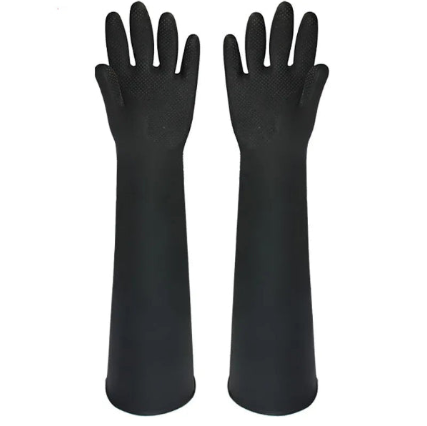
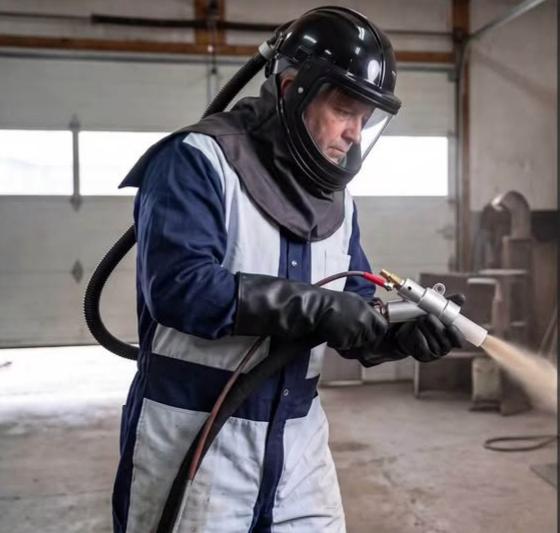
Workers constantly deal with torn gloves, abrasive grit rubbing raw hands, and clumsy gun control when using cheap generic gloves. Budget basic options seem cheap upfront, yet you’re replacing them every couple of days and dealing with staff hand irritation.
Abrasion & Puncture Resistance
Regular gloves tear quickly against sharp blast media and nozzle edges. Tiny holes let grit seep in during daily blasting.
Thickened blast gloves use reinforced multi-layer cowhide/rubber palms. They stand up to 8-hour daily blasting and last weeks instead of days.
Comfort & Gun Control
Stiff, dust-caked standard gloves limit finger flexibility, ruining precision blasting work and triggering hand fatigue.
Professional blast gloves have segmented stitching with supple material. Solid protection paired with flexible trigger control for detailed blasting jobs. Extended elastic wrist cuffs block fine abrasive dust effectively.
Actual Long-Term Cost
Cheap gloves = frequent replacements + unplanned work downtime.
Heavy-duty blast gloves cost more at checkout but slash your monthly PPE spending drastically.
Quick Selection Guide
- Standard gloves: Only for occasional light blasting with soft media like walnut shells
- Thick blast gloves: Daily heavy blasting, steel grit, alumina and harsh industrial blasting tasks

Leave a comment
This site is protected by hCaptcha and the hCaptcha Privacy Policy and Terms of Service apply.