
Introduction
Setting up a sandblasting workspace does not always require a large industrial facility. For small workshops, a well-planned sandblasting system can provide excellent surface cleaning, rust removal, paint stripping, and finishing results while keeping costs under control. The key is choosing the right combination of equipment, including the air compressor, sandblasting machine, blasting gun, nozzle, protective gear, and accessories. This guide will help you understand what a complete small workshop sandblasting setup needs and how to build an efficient working system.
Main Problem: What Do Small Workshops Need for Sandblasting?
Many beginners think a sandblasting setup only requires a blasting gun and abrasive media. However, a complete system depends on several connected components. If one part does not match properly, the entire process can become inefficient.
Common problems in small workshops include:
1. Insufficient Air Supply
Sandblasting relies heavily on compressed air. A compressor that is too small cannot provide continuous airflow, causing weak blasting performance and uneven surface treatment.
2. Choosing the Wrong Nozzle
The nozzle controls abrasive speed, air consumption, and blasting efficiency. Using an unsuitable nozzle can waste abrasive materials and increase operating costs.
3. Lack of Proper Protection
Sandblasting creates dust, flying particles, and high-speed abrasive impact. Without proper protective equipment, operators may face safety risks during long working periods.
4. Buying Equipment Without Planning
Many workshops purchase individual tools separately without considering compatibility. A complete setup should be designed as a system where each component works together.
Technical Explanation: Key Components of a Complete Sandblasting Setup
A professional small workshop sandblasting system usually includes the following equipment:
1. Air Compressor – The Power Source
The air compressor is the heart of any sandblasting system. It provides the compressed air needed to accelerate abrasive materials through the nozzle.
When selecting a compressor, consider:
- Air pressure (PSI)
- Air volume (CFM)
- Tank capacity
- Continuous working time
For small workshop applications, a compressor with stable airflow is more important than simply having high pressure.
A compressor that matches the nozzle size will provide:
- Faster surface cleaning
- More consistent blasting performance
- Lower abrasive consumption
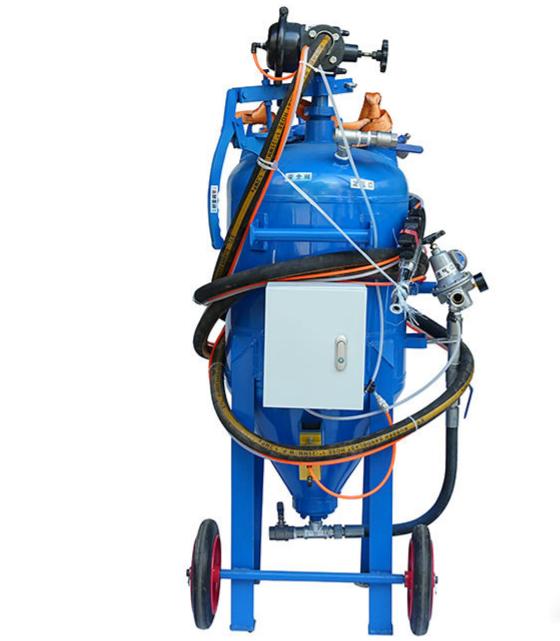
2. Sandblasting Machine or Blast Pot – Abrasive Storage System
A sandblasting machine stores abrasive materials and mixes them with compressed air before sending them through the blasting hose.
For small workshops, common options include:
Portable Sandblasting Machines
Suitable for:
- Automotive parts
- Metal restoration
- Farm equipment repair
- Outdoor projects
Advantages:
- Easy to move
- Lower investment cost
- Flexible operation
Sandblasting Cabinets
Suitable for:
- Small metal parts
- Precision cleaning
- Workshop environments
Advantages:
- Cleaner operation
- Abrasive recycling
- Better visibility
A cabinet system is ideal when working with smaller components that require controlled blasting.
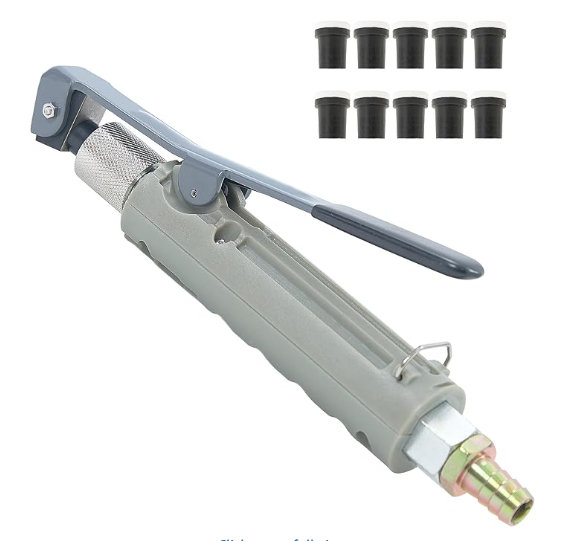
3. Sandblasting Gun and Hose – The Working Connection
The blasting gun controls the abrasive spray direction and allows operators to perform detailed surface treatment.
A good sandblasting gun should provide:
- Comfortable operation
- Durable construction
- Stable abrasive flow
- Easy nozzle replacement
The sandblast hose is also important because it must handle high-pressure airflow and abrasive wear.
A quality hose improves:
- Safety
- Working efficiency
- Equipment lifespan
4. Sandblasting Nozzles – Controlling Performance
The nozzle is one of the most important parts of the entire system.
Different nozzle materials provide different service lives:
| Nozzle Type | Features | Suitable Application |
|---|---|---|
| Ceramic Nozzle | Affordable, lightweight | Light-duty blasting |
| Boron Carbide Nozzle | Extremely wear-resistant, long lifespan | Professional and heavy-duty blasting |
| Tungsten Carbide Nozzle | Good durability | General workshop use |
Nozzle size also affects performance:
- Smaller nozzle: Lower air consumption, detailed work
- Larger nozzle: Faster cleaning, higher air demand
Choosing the correct nozzle helps balance speed, efficiency, and operating cost.
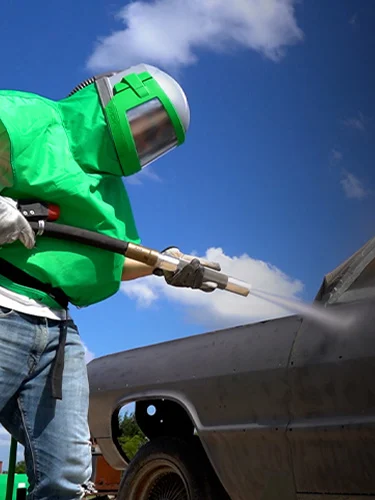
5. Safety Equipment – Protecting the Operator
A complete sandblasting setup should always include professional protective equipment.
Essential safety gear includes:
Sandblasting Helmet
A blasting helmet protects the operator from:
- Abrasive particles
- Dust exposure
- Flying debris
Features to consider:
- Clear viewing lens
- Air supply system
- Anti-fog design
- Replaceable outer lenses
Sandblasting Gloves
Heavy-duty gloves protect hands from abrasive impact while allowing comfortable operation.
Important features:
- Wear-resistant rubber material
- Long sleeve protection
- Flexible movement
Protective Suit
A blasting suit reduces direct contact with abrasive materials and improves operator comfort during extended work.
Complete Small Workshop Sandblasting Setup Comparison
| Workshop Type | Recommended Setup | Main Applications |
|---|---|---|
| Hobby Workshop | Small compressor + blasting gun + ceramic nozzle + safety gear | Small repairs, DIY projects |
| Automotive Workshop | Medium compressor + blast cabinet + durable nozzle + protective equipment | Car parts, paint removal |
| Professional Small Business | Industrial compressor + blast pot + boron carbide nozzle + complete safety system | Continuous production work |
Buying Guide: How to Build the Right Sandblasting System
Before purchasing equipment, consider these factors:
Step 1: Define Your Application
Ask yourself:
- What materials will you blast?
- How often will you use the equipment?
- What size parts will you process?
Small parts and occasional projects require a different setup from daily professional work.
Step 2: Match the Compressor and Nozzle
The compressor and nozzle must work together.
A larger nozzle requires more airflow. If the compressor cannot supply enough air, blasting performance will decrease.
Always check:
- Compressor CFM
- Nozzle diameter
- Working pressure
Step 3: Choose Durable Accessories
Accessories directly affect long-term operating costs.
High-quality components such as:
- Boron carbide nozzles
- Heavy-duty sandblast hoses
- Wear-resistant gloves
- Reliable blasting guns
can reduce replacement frequency and improve productivity.
Step 4: Build Safety Into Your Setup
Safety equipment should not be considered optional.
A professional setup should include:
✓ Sandblasting helmet
✓ Protective gloves
✓ Blasting suit
✓ Proper ventilation system
A safer working environment allows operators to work longer and more efficiently.
Conclusion
Building a complete sandblasting setup for a small workshop is about choosing the right combination of equipment rather than simply buying the most powerful tools. A balanced system with a suitable compressor, reliable blasting equipment, durable nozzles, and proper safety protection will provide better performance and lower operating costs.
Whether you are restoring automotive parts, cleaning metal surfaces, or running a professional workshop, investing in the right sandblasting equipment helps you achieve faster, cleaner, and more consistent results.
CTA: Explore HOLDWIN Sandblasting Tools
Ready to build your own sandblasting workspace?
Explore HOLDWIN professional sandblasting tools and accessories, including sandblasting guns, blast nozzles, hoses, gloves, helmets, and workshop solutions designed for reliable performance and long service life.
Start creating a more efficient sandblasting setup today.

Leave a comment
This site is protected by hCaptcha and the hCaptcha Privacy Policy and Terms of Service apply.