
Introduction
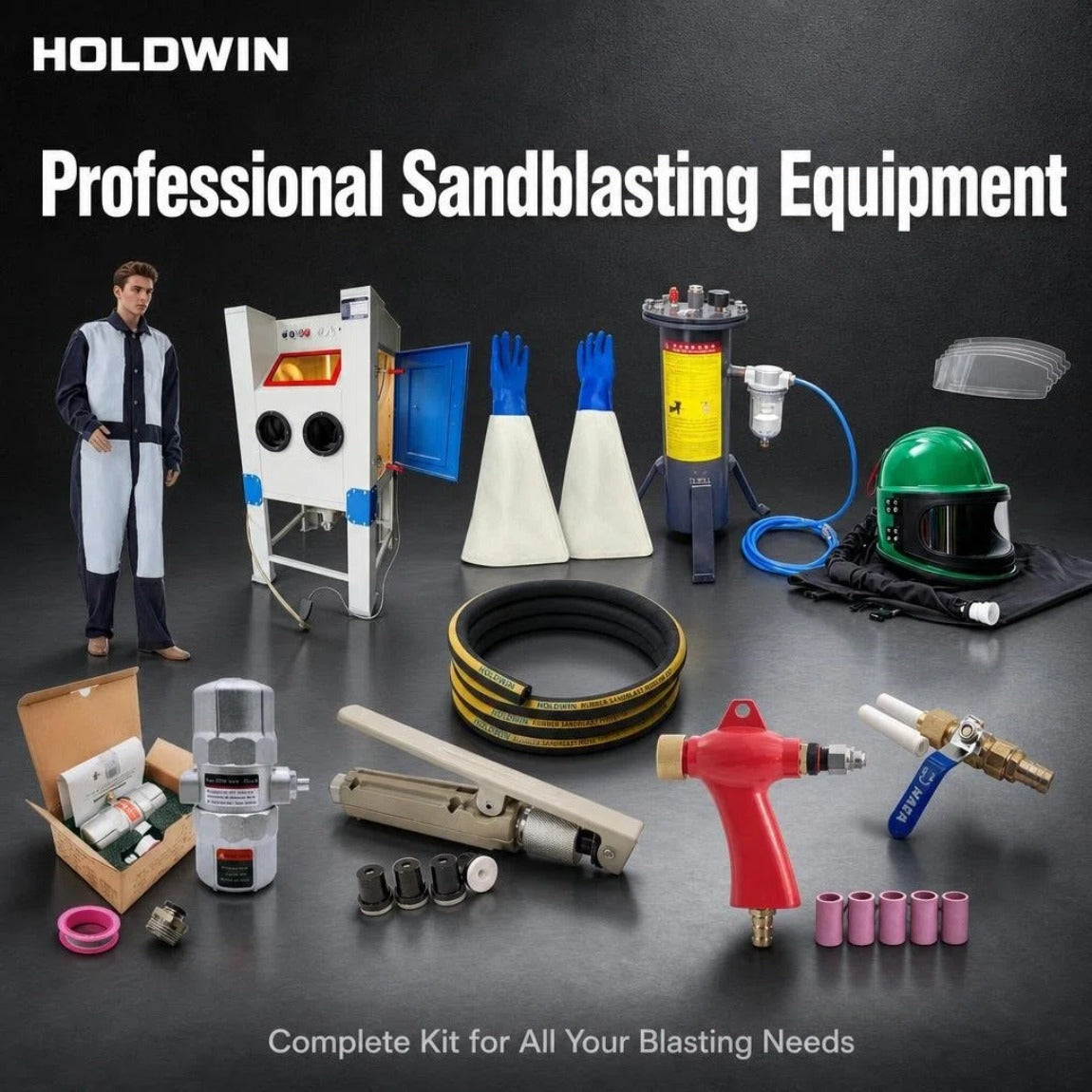
Sandblasting, also known as abrasive blasting, delivers fast surface cleaning, rust removal and coating stripping, yet it carries serious workplace hazards. High-speed abrasive particles, fine silica dust, loud noise and contaminated compressed air threaten operators’ long-term health. Simple dust masks or basic work clothes are never enough. A complete set of certified safety equipment protects against acute injuries and chronic respiratory disease. Every professional or DIY blaster must build a safety kit before starting any blast job.
Main Problem
Many sandblasting operators underestimate hidden risks, especially air quality risks from their air compressor. Standard shop compressors produce air mixed with oil mist, water vapor, fine particulates and hydrocarbon vapors. When fed directly into a blast helmet, these contaminants enter the lungs and cause permanent respiratory damage.
Other common hazards include rebounding abrasive media cutting skin or eyes, noise-induced hearing loss, and impact injuries to hands and feet. A lot of new users only buy a blast helmet and skip the breathing air purification system. This is a dangerous shortcut that fails OSHA requirements and exposes workers to preventable illness. Even short blasting sessions can accumulate harmful dust and compressor fumes.
Technical Explanation
The most critical safety component for sandblasting is the supplied-air respirator system. Unlike disposable dust masks, a supplied-air helmet delivers positive-pressure clean air from a dedicated air line. The breathing air filter sits between your air compressor and blast helmet. It removes moisture, oil mist and ultra-fine particles down to 0.01μm with activated carbon media, cleaning compressed air to meet breathing-air standards.
The integrated regulator and pressure gauge let operators monitor and adjust outlet air pressure in real time. Stable air pressure maintains positive pressure inside the blast helmet, stopping dust from leaking in.
Additional protective gear works together with the air supply system:
- Blast Helmet with Cape: Full head, face and neck protection against ricocheting abrasives; positive pressure prevents dust ingress.
- Heavy-Duty Blast Suit: Abrasion-resistant coveralls to shield skin from flying grit.
- Blasting Gloves: Thick leather gloves protecting hands from sharp, high-speed media.
- Hearing Protection: Ear plugs or earmuffs to reduce extreme blasting noise.
- Steel-Toed Safety Boots: Protect feet from falling blast media and heavy equipment.
Comparison Table
| Equipment | Core Purpose | Can I Skip It? |
|---|---|---|
| Breathing Air Filter (with regulator & gauge) | Purify compressor air; remove oil, water and fine particles | ❌ Not recommended; unclean air causes lung damage |
| Supplied-Air Blast Helmet | Protect head, eyes and deliver clean breathing air | ❌ Mandatory for abrasive blasting |
| Blast Suit | Full-body protection against rebounding abrasives | ❌ Required for open blasting |
| Heavy Leather Blasting Gloves | Prevent cuts and abrasions on hands | ❌ Required |
| Hearing Protection | Prevent permanent hearing loss | ❌ Required |
| Steel-Toed Boots | Protect feet from falling media and equipment | ✅ Minimum safety recommendation |
Buying Guide / Solution
When selecting sandblasting safety gear, prioritize respiratory air quality first. Always pick a breathing air filter with built-in pressure regulation and a readable pressure gauge. Quick-change filter cartridges simplify routine maintenance, keeping air clean across long shifts.
Choose the right hose length for your workspace: shorter 13ft hoses suit compact blast booths, while 26ft hoses give operators freedom to move around larger workpieces. The filter unit itself stays the same; only the airline length changes.
Always inspect your entire safety system before each job. Check air hoses for cracks, verify pressure readings, and replace filter cartridges according to usage. Never run blasting equipment without testing your breathing air supply. Match your PPE kit to your blasting media: silica-based abrasives demand stricter air filtration and full sealed protection.
Conclusion
Sandblasting safety is not optional. Flying abrasives, loud noise and invisible airborne contaminants create real risks for every operator. A complete safety setup starts with a reliable breathing air purification system paired with a certified blast helmet, blast suit, gloves, hearing protection and safety footwear. Investing in quality safety equipment protects your team, reduces downtime and keeps your operation compliant.
Explore HOLDWIN Sandblasting Tools, including our G01 breathing air filter with regulator and pressure gauge, available with your choice of 13ft or 26ft breathing air hose. Build your safe abrasive blasting setup today.

Leave a comment
This site is protected by hCaptcha and the hCaptcha Privacy Policy and Terms of Service apply.