
Introduction
A dedicated sandblasting workspace keeps your rust removal, paint stripping and metal restoration projects efficient and safe. Many DIY enthusiasts start blasting without proper preparation and end up with airborne dust, poor visibility and health hazards. You do not need a huge professional shop. With careful planning, you can set up a compliant, budget-friendly sandblasting area that fits your projects and protects your body.
Main Problem
Most new blasters underestimate the hazards of blasting dust. They set up in regular garages or open yards, only to find abrasive dust spreading everywhere, damaging nearby equipment and electronics. Without good ventilation and dust capture, fine silica or garnet particles float in the air and cause permanent lung damage. A poorly arranged workspace also slows down work: no storage for abrasives, messy air hose routing and nowhere to place finished workpieces. Many beginners do not know local rules about outdoor blasting, and they risk fines or neighbour complaints.
Technical Explanation
A qualified sandblasting workspace relies on four core pillars: containment, airflow, dust extraction and safety separation.
Containment stops abrasive media and dust from escaping. Enclosed blast booths work best for indoor use; open-air blasting needs barriers and wind control.
Ventilation creates constant one-way airflow: dirty air is pulled out, while fresh clean air flows into the blasting zone. The airflow rate must be enough to clear dust faster than you generate it.
Dust collection filters out fine particulate waste before exhaust air releases into the surroundings. Standard shop vacuums are not designed for blasting dust; they clog quickly and leak fine particles.
Layout separation divides the zone into blasting area, abrasive storage, workpiece prep station and finished-parts area. This prevents cross-contamination between clean metal and used abrasive waste.
Also, your workspace needs stable, level ground to hold your blast gun, air compressor and hoses, and enough room to rotate large workpieces easily.
Comparison / Table
Setup Type Best For Pros Cons
Portable Blast Booth Small DIY parts, limited budget Easy assembly, movable, low cost Small working space, lower dust capture efficiency
Permanent Indoor Blast Booth Frequent blasting, medium-sized parts Excellent dust control, stable airflow Higher cost, fixed location, needs dedicated room
Outdoor Blasting Area Large heavy workpieces No space limit, low build cost Weather dependent, hard to contain dust, risk of complaints
Buying Guide / Solution
Step 1: Choose your location. If local codes allow outdoor blasting, pick a sheltered spot away from houses, vehicles and gardens, downwind from living areas. For year-round use, a garage or dedicated shed with room for a booth is better. Confirm your local environmental rules first.
Step 2: Pick your blast booth. Hobbyists can start with a portable booth for small metal parts like brackets and auto hardware. If you plan regular restoration work, invest in a welded permanent booth with side access panels.
Step 3: Install dust collection and ventilation. Match your dust collector CFM to your booth size. Add intake vents on one side and exhaust on the opposite side to create cross flow. Never skip the respirator even with a collector running.
Step 4: Organize your layout. Keep the air compressor outside the blasting zone to avoid dust damage. Separate new abrasive storage from used waste media. Leave space for lighting inside the booth, bright LED lights help you see the surface finish clearly.
Step 5: Prepare safety supplies. Keep your blast helmet, protective gloves, coveralls and spare nozzles within easy reach. Put a fire extinguisher nearby, because friction heat can ignite grease residue on metal pieces.
Conclusion
Building a sandblasting workspace is not only about putting up walls. The priority is controlling dust and reducing health risks while keeping your workflow smooth. Start small if you are a hobbyist, then upgrade your booth and dust system as your projects grow. A well-planned blasting area lets you get cleaner, more consistent surface results every time, without making a mess or endangering yourself.
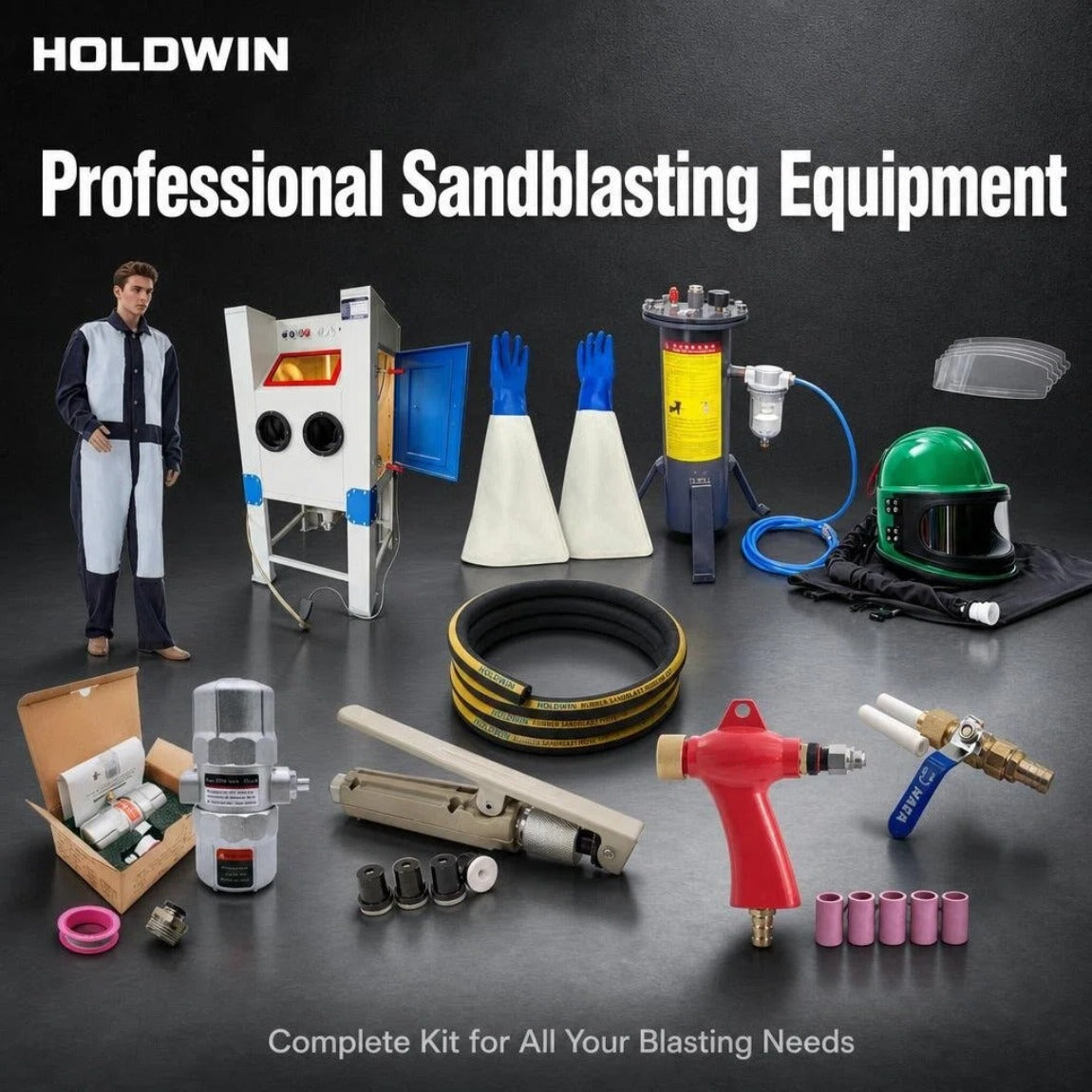
Grab reliable HOLDWIN sandblasting guns, carbide nozzles and protective gear to match your new blasting workspace and finish your restoration projects with confidence.

Leave a comment
This site is protected by hCaptcha and the hCaptcha Privacy Policy and Terms of Service apply.