
Introduction
Picking the wrong abrasive media can ruin your workpiece, waste time, and add extra cleanup work. Many DIYers and metal restorers struggle to tell which blasting material fits their project. The right abrasive balances cutting power, surface roughness, material safety, and budget. Whether you remove rust, strip paint, or create a matte texture, your media choice decides your final blasting result.
Main Problem
A lot of beginners grab any abrasive they can find, only to end up with damaged thin aluminum, overly deep etching on auto parts, or media that is too soft and removes nothing. Some abrasives are unsafe for indoor use, while others cost too much for small hobby jobs. Without knowing the hardness and grit properties, you risk ruining restoration pieces or slowing down your whole workflow.
Technical Explanation
Abrasive media is the granular material shot by your sandblasting gun against the workpiece. Two key factors control performance: Mohs hardness and grit size. Harder media cuts faster for heavy rust and thick coatings; softer media delivers gentle cleaning without scratching. Larger grits remove heavy material quickly, and fine grits create smooth, uniform finishes. You also need to check if the media is reusable, recyclable, or disposable for your workspace setup.
Comparison/Table
Abrasive Media Hardness Best For Notes
Aluminum Oxide High Steel rust removal, heavy paint stripping, etching Reusable, aggressive; not for soft metal
Glass Beads Medium-Low Aluminum, stainless steel, cosmetic matte finish Gentle, bright satin look, no deep cuts
Crushed Glass Medium Auto body stripping, light rust, hobby projects Affordable, single-use
Walnut Shells / Corn Cobs Low Wood, plastic, soft substrates, delicate cleaning Very soft, no metal etching
Silicon Carbide Very High Hard metal, stone, aggressive profiling Fast cutting, premium price
Buying Guide / Solution
1. Identify your workpiece material first. Soft materials (aluminum, plastic, wood) use glass beads or organic media. Hard carbon steel can take aluminum oxide.
2. Confirm your goal: heavy rust removal picks hard coarse grit; surface finishing picks fine, gentle media.
3. Think about your workspace. Indoor blasting prefers low-dust, recyclable media; outdoor DIY jobs can use cheap crushed glass.
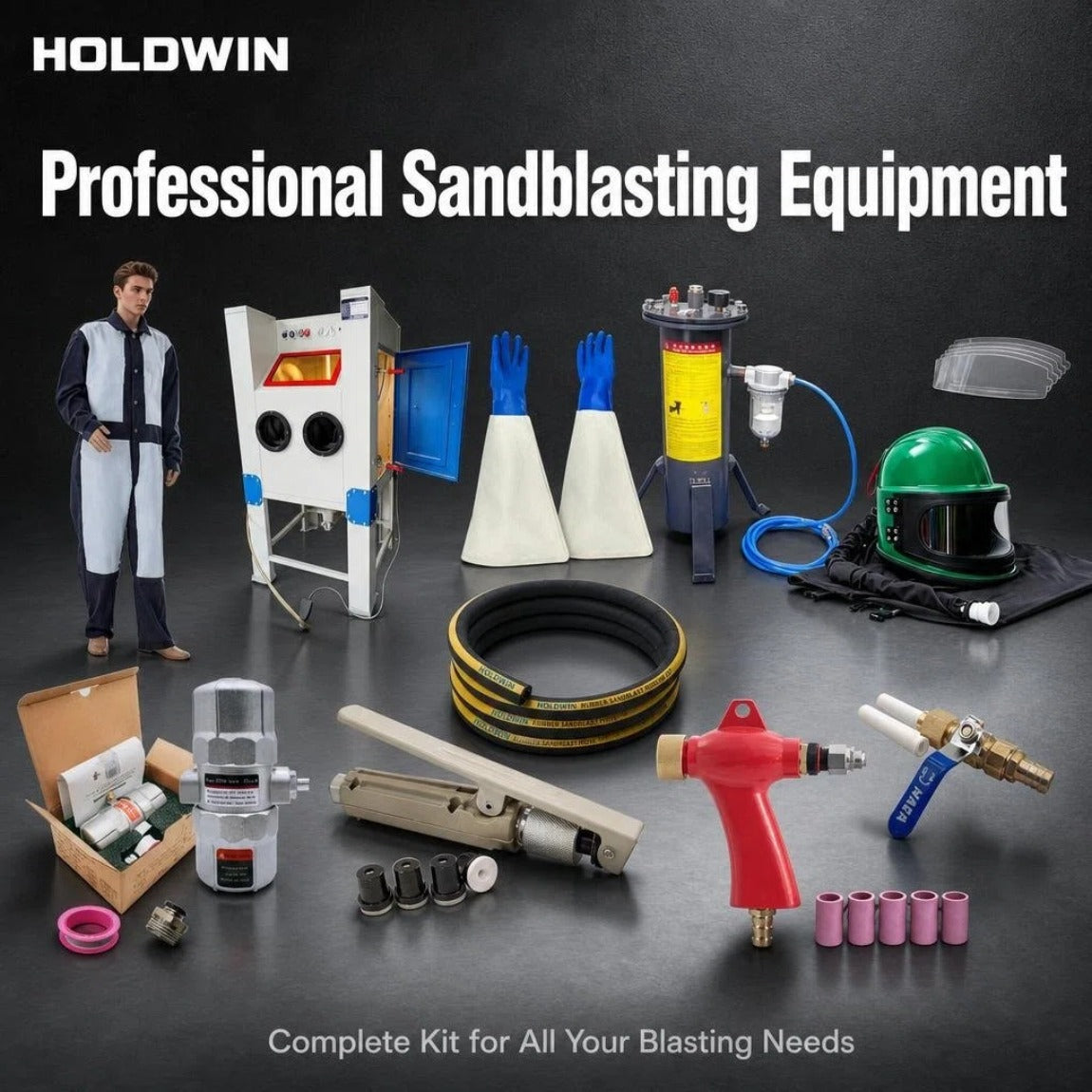
4. Match your HOLDWIN sandblasting gun nozzle size to your media grit to avoid clogging and unstable blasting flow.
Conclusion
There is no single “best” abrasive media for all sandblasting jobs. The right choice always depends on what you are blasting and the finish you want. Taking a minute to match your media to your project saves you from costly mistakes and rework. Mastering abrasive selection will make every sandblasting session cleaner, faster, and more consistent.
Explore HOLDWIN Sandblasting Tools

Leave a comment
This site is protected by hCaptcha and the hCaptcha Privacy Policy and Terms of Service apply.