
Introduction
Choosing the right sandblasting nozzle is essential for improving blasting efficiency, reducing abrasive consumption, and extending equipment life. The nozzle is one of the most important components in a sandblasting system because it directly affects blasting speed, coverage area, pressure efficiency, and surface finish quality.
Different projects require different nozzle materials and sizes. A nozzle suitable for light surface cleaning may not perform well in heavy-duty industrial blasting applications. Common options include ceramic nozzles and boron carbide nozzles, each designed for different working conditions.
In this guide, we will explain how to select the right sandblasting nozzle based on your project requirements, abrasive type, working pressure, and expected service life.
Why Choosing the Right Sandblasting Nozzle Matters
A sandblasting nozzle controls the speed and direction of abrasive particles as they leave the blasting gun. The right nozzle can help you achieve:
- Faster surface preparation
- More uniform blasting results
- Lower abrasive consumption
- Reduced air compressor load
- Longer equipment lifespan
Using the wrong nozzle can lead to several problems, including slow blasting speed, uneven surface treatment, excessive air usage, and frequent nozzle replacement.
Key Factors to Consider When Choosing a Sandblasting Nozzle
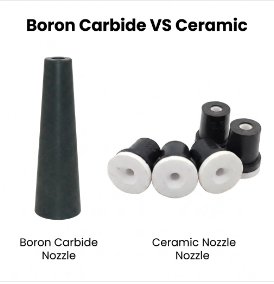
1. Nozzle Material: Ceramic vs Boron Carbide
The material of the nozzle determines its durability, wear resistance, and suitable applications.
Ceramic Nozzle
Ceramic nozzles are a popular choice for light and medium-duty sandblasting applications. They offer good hardness, chemical resistance, and affordable replacement costs.
They are commonly used for:
- DIY sandblasting projects
- Small surface cleaning jobs
- Paint removal
- Rust removal
- Glass and metal etching
Advantages:
- Affordable price
- Lightweight design
- Easy replacement
- Suitable for occasional use
However, ceramic material has lower wear resistance compared with industrial-grade nozzle materials. For continuous blasting operations, ceramic nozzles may require more frequent replacement.
Boron Carbide Nozzle
Boron carbide nozzles are designed for heavy-duty and professional blasting applications. Boron carbide is one of the hardest materials available, offering excellent wear resistance and long service life.
They are ideal for:
- Industrial sandblasting
- Continuous production lines
- Large metal surface preparation
- Shipyard and construction applications
- High-pressure blasting systems
Advantages:
- Extremely high wear resistance
- Longer service life
- Better performance with aggressive abrasives
- Reduced downtime from nozzle replacement
Although boron carbide nozzles have a higher initial cost, their longer lifespan often makes them more economical for professional users.
Ceramic Nozzle vs Boron Carbide Nozzle Comparison
| Feature | Ceramic Nozzle | Boron Carbide Nozzle |
|---|---|---|
| Best For | Light and medium blasting | Heavy-duty industrial blasting |
| Durability | Medium | Excellent |
| Service Life | Shorter | Much longer |
| Cost | Lower | Higher |
| Abrasive Compatibility | Common abrasives | Most abrasive materials |
| Recommended Use | Occasional projects | Continuous operation |
2. Choose the Correct Nozzle Size
Nozzle size directly affects abrasive flow and air consumption.
A larger nozzle opening provides:
- Wider blasting coverage
- Faster material removal
- Higher abrasive consumption
A smaller nozzle provides:
- More precise blasting
- Lower air requirements
- Better control for detailed work
When selecting nozzle size, consider your air compressor capacity. A nozzle that is too large for your compressor can cause pressure drops and reduce blasting efficiency.
3. Match the Nozzle with Your Abrasive Material
Different abrasives create different levels of nozzle wear.
Common abrasive materials include:
- Aluminum oxide
- Garnet
- Glass beads
- Steel grit
- Sand
For softer abrasives and occasional work, ceramic nozzles can provide reliable performance.
For harder abrasives or long working hours, boron carbide nozzles are recommended because they can handle higher wear conditions.
Buying Guide: How to Select the Right Sandblasting Nozzle
Before purchasing a nozzle, check these important points:
For DIY Users
Choose a ceramic nozzle if you:
- Use a sandblaster occasionally
- Work on small parts
- Need an affordable replacement option
For Professional Users
Choose a boron carbide nozzle if you:
- Operate a sandblasting machine frequently
- Need consistent blasting performance
- Want to reduce maintenance costs
- Use abrasive materials regularly
Check Compatibility
Always confirm:
- Nozzle thread size
- Nozzle diameter
- Blasting gun compatibility
- Working pressure range
- Air compressor capacity
A high-quality nozzle can only perform properly when matched with the correct equipment.
Conclusion
Selecting the right sandblasting nozzle can significantly improve your blasting results and reduce operating costs. Ceramic nozzles are a practical choice for light-duty and occasional projects, while boron carbide nozzles provide superior durability for demanding industrial applications.
By considering your blasting frequency, abrasive material, compressor capacity, and required service life, you can choose the nozzle that best fits your project.
Explore HOLDWIN Sandblasting Tools
Looking for reliable sandblasting nozzles and accessories?
Explore HOLDWIN Ceramic Nozzles and Boron Carbide Nozzles designed for efficient blasting performance, durability, and professional surface treatment applications.

Leave a comment
This site is protected by hCaptcha and the hCaptcha Privacy Policy and Terms of Service apply.