
Introduction(80–100 words)
Shopping for sandblasting tools can be confusing for new DIY restorers and small shop owners. Many people buy separate parts only to find they do not work well together. This buying checklist covers every essential piece of your blasting setup. Whether you are stripping rust off auto parts or cleaning metal frames, use this guide to select long-lasting, well-matched HOLDWIN sandblasting tools and skip costly buying mistakes.
Main Problem
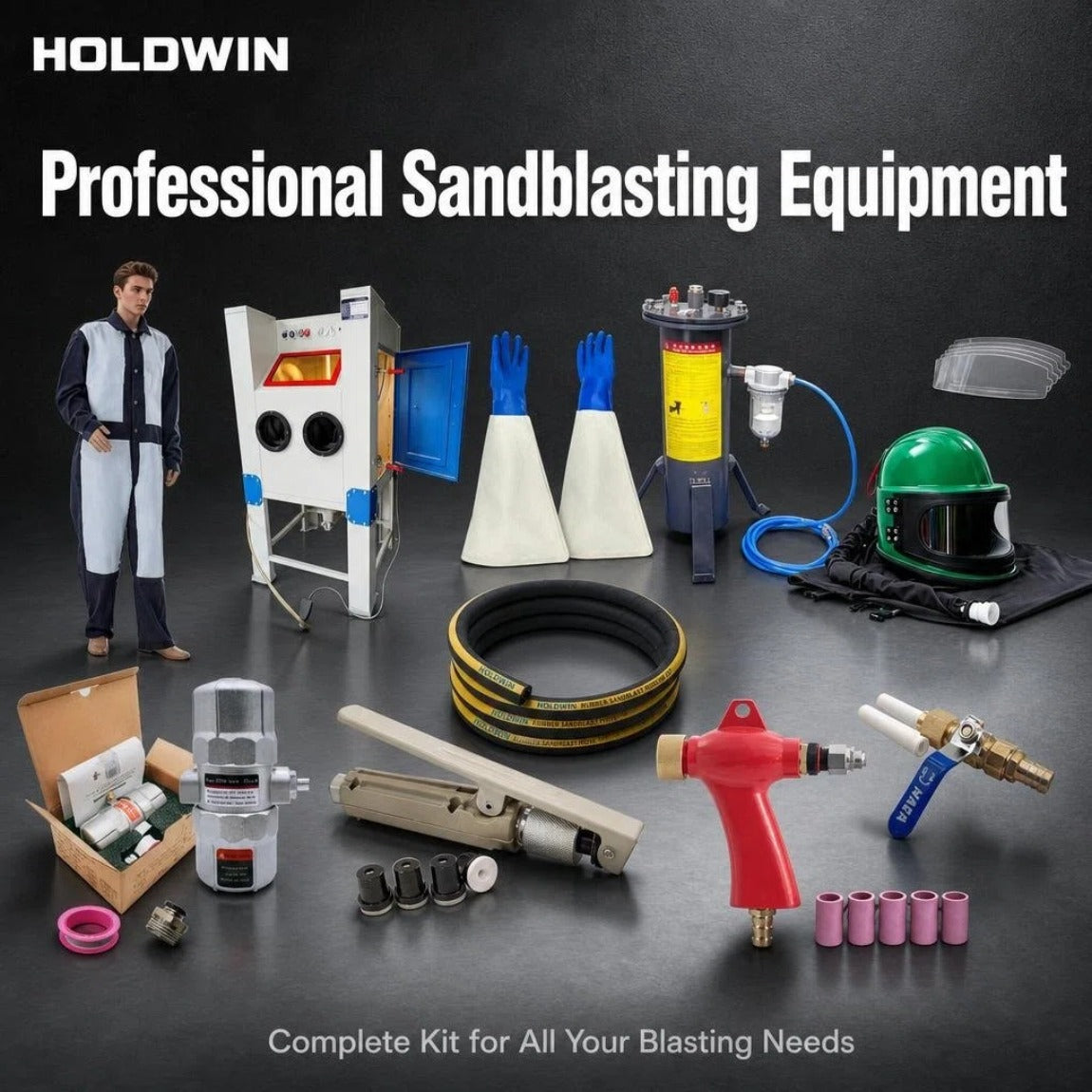
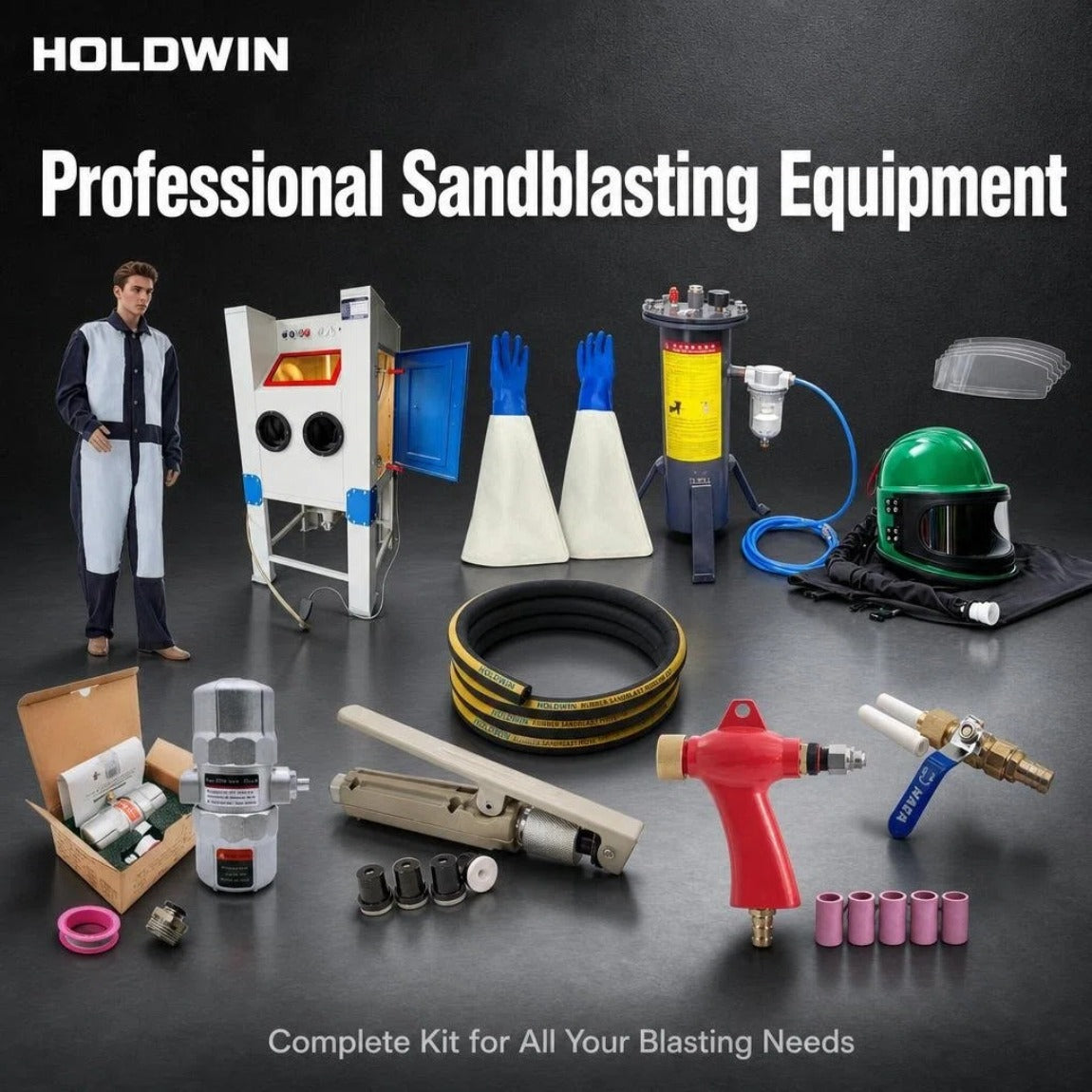
Most buyers only focus on the sandblasting gun and overlook supporting accessories. Poorly matched nozzles wear out quickly. Low-quality blast hoses leak and reduce blasting pressure. Many hobbyists skip proper protective helmets, risking lung and eye injury. It is also common to buy equipment that does not match the CFM output of your air compressor, leading to weak, slow blasting.
Technical Explanation
A complete sandblasting system works as one connected unit: air compressor → blast pot → sandblasting gun → nozzle → blast hose → safety protection.
Your air compressor CFM rating must match your gun and nozzle size. Nozzle material decides service life: boron carbide nozzles last far longer than ceramic or tungsten alternatives. Safety gear including blasting helmets and dust-resistant gloves is mandatory. You also need to match your abrasive media type to the metal you are cleaning, to avoid damaging the workpiece surface.
Comparison/Table
Component What to Check Before Purchase Common Bad Choice
Sandblasting Gun Weight, air inlet size, media flow stability Cheap lightweight guns with unstable flow, easy to clog
Nozzle Inner diameter & material (Boron Carbide recommended) Thin ceramic nozzles that wear out after a few jobs
Blast Hose Inner diameter, abrasion-resistant rubber Ordinary rubber tubing that quickly wears through
Blasting Helmet Air feed system, viewing window durability Thin, low-cost masks without fresh air supply
Abrasive Media Grain size, hardness matched to workpiece Too coarse media that gouges and damages metal
Buying Guide / Solution
1. Confirm your air compressor CFM first. Your gun and nozzle must fit the compressor’s airflow capacity.
2. Select nozzle material: choose boron carbide for heavy, frequent blasting jobs. Ceramic works for light, occasional DIY work.
3. Pick an ergonomic sandblasting gun. Long jobs will fatigue your hands quickly if the gun is heavy.
4. Do not skip safety items. A proper blast helmet protects your eyes and respiratory system from fine abrasive dust.
5. Check hose inner diameter. Too narrow a hose restricts media flow and weakens blasting power.
6. Match abrasive grain size. Fine media for gentle cleaning; coarse grit for heavy rust removal.
Conclusion
Purchasing sandblasting equipment is not just picking individual tools. All components must work as a matched system. Use this checklist before you place your order, to avoid incompatible gear, fast-wearing parts and safety hazards. Taking time to verify specs helps you get consistent blasting results and extend the service life of your sandblasting kit.
Explore HOLDWIN Sandblasting Tools
Ready to build your reliable blasting setup? Browse our HOLDWIN sandblasting guns, boron carbide nozzles, blast helmets and replacement parts built for both DIY garage restoration and small industrial workshop use.

Leave a comment
This site is protected by hCaptcha and the hCaptcha Privacy Policy and Terms of Service apply.