
Introduction
Aluminum is widely used for car parts, boat fittings and custom metal projects. Sandblasting aluminum quickly removes oxidation, old paint and surface grime to create a clean, textured finish for powder coating or painting. However, aluminum is soft and easy to damage during blasting. Many hobbyists and small shop owners accidentally warp thin panels or create unwanted deep scratches. This guide covers proven best practices to blast aluminum safely and get consistent, professional results every time.
Main Problem
Most beginners treat aluminum like steel when sandblasting. They use aggressive abrasive media or too high air pressure, which causes 3 common issues: thin aluminum sheets bend and warp; hard grit cuts too deep and ruins the base metal; over-blasting creates uneven surfaces that are hard to refinish. Many users also struggle to choose the right blast media and pressure setting, ending up with a part that is too rough or still has leftover oxidation.
Technical Explanation
Aluminum is a soft, non-ferrous metal. Unlike steel, it does not rust, but it forms a thin layer of aluminum oxide on exposure to air. The goal of sandblasting aluminum is only to strip surface contaminants and remove that oxide layer, not cut into the base metal.
Key principle: Use lighter, finer abrasives and lower blasting pressure. Keep the blast nozzle at a proper distance, and avoid holding the gun in one spot too long. Short, sweeping passes prevent heat buildup, which is the main cause of warping on thin aluminum.
Comparison/Table
Abrasive Media Best for Aluminum Notes
Aluminum Oxide ✅ Moderate stripping Sharp, use low pressure for heavy oxidation
Glass Beads ✅ Recommended Creates smooth satin finish, gentle on soft aluminum
Plastic Media ✅ Delicate parts Removes paint only, minimal surface etching
Silicon Carbide ❌ Not recommended Too aggressive, easily gouges aluminum
Buying Guide / Solution
1. Select blast media: Glass beads are the top pick for most aluminum work. Choose fine grades for thin sheet metal. Save aluminum oxide only for thick cast aluminum with heavy oxidation.
2. Adjust air pressure: Keep pressure under 60 PSI for thin aluminum. Thick cast aluminum can go up to 80 PSI.
3. Blasting technique: Hold nozzle 8–12 inches away from the workpiece. Use continuous side-to-side sweeping strokes, never stay fixed on one area.
4. Post-blasting care: Blast aluminum right before coating. After blasting, the fresh aluminum surface oxidizes quickly. Clean off dust immediately and apply primer or powder coat within hours.
5. Safety gear: Wear full blast helmet, dust respirator and protective gloves to avoid inhaling fine dust.
Conclusion
Sandblasting aluminum is achievable if you respect its soft nature. The core rule is less pressure and milder media. Avoid the common mistake of using steel blasting settings on aluminum. With correct media, pressure and sweeping technique, you can safely strip paint and oxidation while preserving the integrity of your aluminum workpiece. Master these tips, and your aluminum parts will have a perfect surface ready for coating.
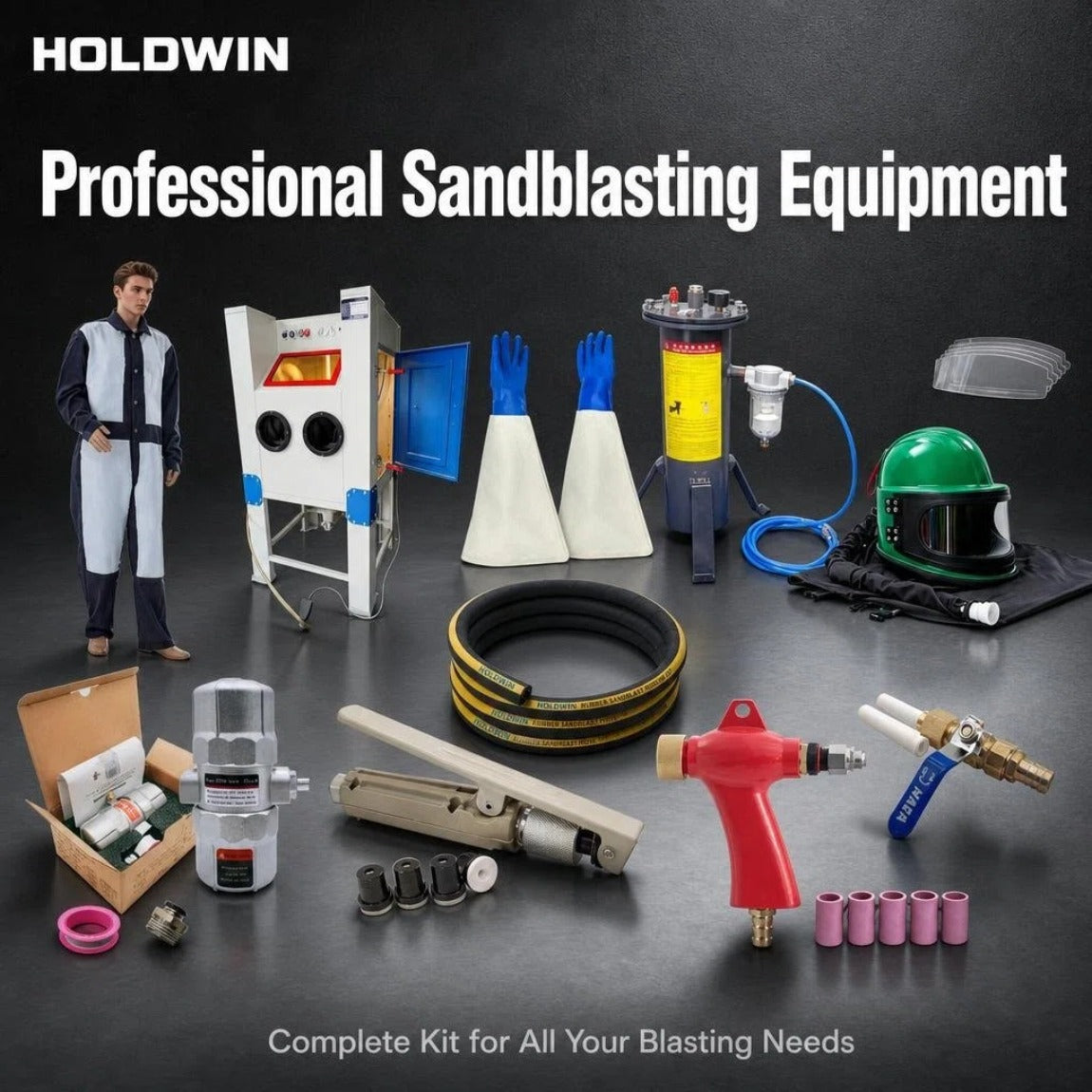
Explore HOLDWIN Sandblasting Tools

Leave a comment
This site is protected by hCaptcha and the hCaptcha Privacy Policy and Terms of Service apply.